AI can reduce lesson-planning time, but speed alone does not produce a good lesson.
The goal is to use AI to create a strong first draft while preserving the teacher control over objectives, methodology and quality.
Here is a practical ten-minute workflow.
Minute 1: Define one clear outcome
Begin by deciding what the student should be able to do by the end of the lesson.
For example:
- Describe a past experience using narrative tenses
- Participate in a job interview
- Explain a business decision
- Use language for agreeing and disagreeing
- Understand the main ideas in a short article
Avoid asking AI to create an English lesson without a specific outcome.
Minutes 2-3: Add student context
The quality of the lesson depends on the quality of the context.
Include:
- Proficiency level
- Age
- Profession
- Interests
- Current difficulties
- Lesson duration
- Previously studied language
- Reason for learning English
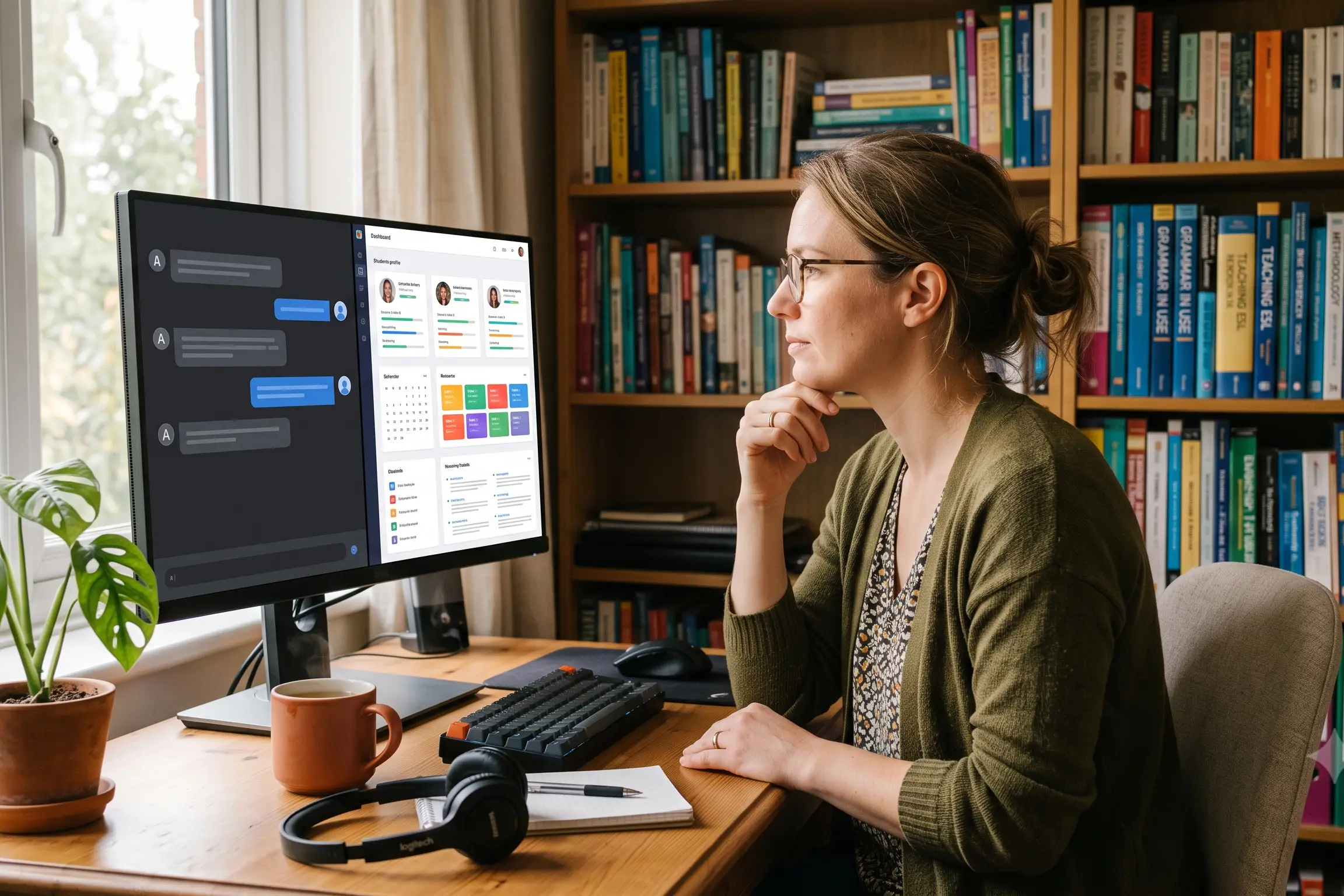
A platform such as Lesson Mate AI can store this information in a student profile, so teachers do not need to reconstruct the same prompt before every class. It can then generate lessons and activities based on the learner level, goals, interests and progress.
Minutes 4-5: Generate the lesson sequence
A practical communicative sequence might contain:
- A short warm-up
- Exposure to the target language
- Guided noticing
- Controlled practice
- Freer speaking
- Feedback and review
Ask the AI to include approximate timings. This helps prevent a lesson containing 90 minutes of material for a 50-minute class.
Minutes 6-7: Check the difficulty
Review the generated material for:
- Vocabulary above the student level
- Excessively long instructions
- Grammar that has not been introduced
- Cultural assumptions
- Artificial or unnatural dialogue
- Questions the student cannot reasonably answer
AI can estimate difficulty, but the teacher knows the learner.
Minute 8: Improve the speaking task
AI-generated lessons often contain broad discussion questions but no clear communicative purpose.
Transform a general conversation into a task.
Instead of
What do you think about remote work?
Use
Your company is reducing office space. Discuss three possible hybrid-work policies and agree on the best option.
A decision, problem or outcome usually produces richer communication.
Minute 9: Prepare optional activities
Always have one additional activity available. This could be:
- A more difficult follow-up question
- An extra role-play
- Error-correction sentences
- A vocabulary challenge
- A short writing task
The additional material is useful when a student progresses faster than expected.
Minute 10: Add personalized homework
Homework should connect directly to the lesson.
For example:
- Record a two-minute voice message using the target vocabulary
- Rewrite five sentences corrected during class
- Prepare an answer for the next role-play
- Review vocabulary through a short quiz
- Write an email based on the lesson scenario
The teacher remains the editor
AI should accelerate preparation, not eliminate professional judgement.
Before using any generated material, check factual accuracy, language naturalness and pedagogical relevance.
A ten-minute AI workflow works because the teacher already understands the student and the learning objective. The technology organizes and accelerates that expertise.